
Stay cool.
Summer and shift work: a difficult combination.
Here you will find what really helps. Short, direct, and immediately actionable.
No obligation. Take what interests you.
CURRENTLY TRENDING
Webinar on August 10, 2026, at 10:00 AM
Shifts. Barbecues. Parties. Sleep?
Despite early shifts, night shifts, and bright days.
How to ensure your sleep doesn’t fall short despite work and summer temptations. Sleep expert Markus Kamps shows what helps in just 20 minutes.
What summer does to you
You are not weaker in the summer.
You face 3 burdens simultaneously
Many wonder: Why am I so exhausted right now?
Is it me? No. It is the summer.
And three things hitting you at the same time.
Heat:
The bedroom does not cool down
Light:
Bright until 9:30 PM. Your body thinks: Day
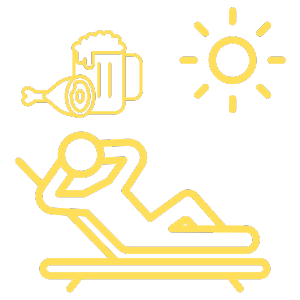
Social:
Barbecues, invitations, sports
It is not just about less sleep – it is about less recovery.
In summer, heat, bright evenings, and barbecues are added to the mix.
Take the check and see what happens to your recovery phases.
What you know and what you do
What you cannot change.
What you control.
The first step: understanding what is fixed and where your most effective levers lie.
This provides relief and shows where energy is meaningfully invested.
This is not controllable
- Chronotype
Lark, owl, or pigeon. Being an early, late, or intermediate type is anchored in the brain. Shift work does not change that. - Your sleep requirement
You need 6–9 hours – genetically determined. Cannot be trained away. - Your working hours
The shift schedule is what it is. You cannot change that.
This is not an excuse. This is biology.
This you can control
- Sleep environment
Temperature, darkness, noise. All controllable. - Light management
Light is your greatest enemy, but also your most powerful tool. - Time management & rhythm
Barbecues, rhythm, sleep planning; do this with strategy, not with sacrifice.
Those who use these three levers – sleep environment, light, and sleep timing – well, sleep significantly better in summer than the average person.
Sleep environment
6°C cooler.
Without air conditioning.
The shift-by-shift cooling method cools your sleep from the outside in. You can implement this tonight in three steps.
Up to 6°C difference, without air conditioning.
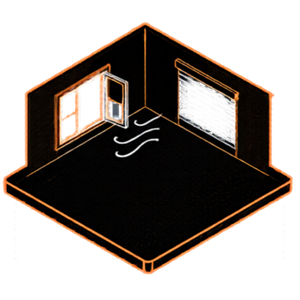
Outside
Bedroom
Windows open from 10 PM to 6 AM. Everything closed during the day.
Ventilate when the outside air is cooler than the room: from 10 PM to 6 AM. During the day, lower the shutters, close the curtains, unplug electronics in standby, as chargers and TVs also generate heat.
Most common mistake: leaving them open during the day
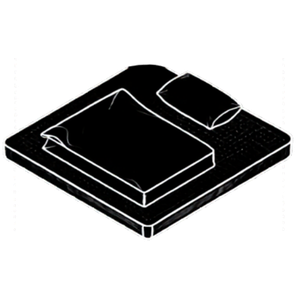
On top
Bedding
Sheets instead of blankets. Cotton instead of synthetics.
Your body must be able to release heat when falling asleep. Swap the duvet for a light sheet, change pajamas to cotton. Flannel and synthetics prevent exactly that.
Your body must be able to release heat when falling asleep. Swap the duvet for a light sheet, change pajamas to cotton. Flannel and synthetics prevent exactly that.
Sounds trivial. Works immediately.
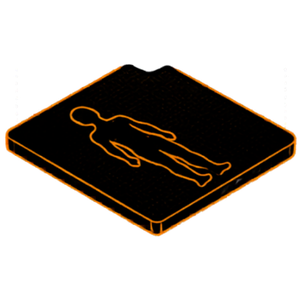
Inside
Your body
Lukewarm shower. Or cold wrists.
A lukewarm (~33°C) shower before sleep measurably lowers the core body temperature. No time? Hold wrists under cold water for 30 seconds; the blood vessels are close to the surface, effective immediately.
An ice-cold shower sounds better, but the body reacts afterwards with more heat production.
$0. Effective immediately.
Light management in summer
Light: your greatest enemy.
And your favorite tool.
Daylight until 9:30 PM, morning light after the night shift. Light costs you sleep.
But those who use it purposefully win just as much back.
As an enemy
- Daylight until 9:30 PM blocks melatonin. Falling asleep takes longer
- Morning light after the night shift keeps the body awake. Daytime sleep is more difficult
- Screen light in the evening: similar effect to sunlight
As a tool
- Sleep mask: 100% darkness, immediate, under $20
- Blue light blocking glasses: specifically blocks sleep-disrupting light
- Blackout film: self-adhesive, $10–15/m², no drilling
- Dim lights from 8 PM: the sleep signal comes from you
After the night shift
- Put on blue light blocking glasses when leaving the workplace
- If possible: wear them during the last hour of the shift
- Darken the home immediately, then put on a sleep mask
- No cell phone, no bright light, no TV
For early shift – evening routine
- Put on blue light blocking glasses from 8 PM
- Dim the lights in the apartment
- Darken the bedroom as early as 8 PM
- No bright screens after 8 PM
Question for Markus Kamps
“I have an early shift and have to go to bed at 9 PM. But it’s still light outside and everyone is sitting at a barbecue. What do I do?”
Darken your bedroom starting at 8 PM. This gives your body the signal: Night is coming. And tell your friends honestly: “I’m leaving at 9 PM. Not because I don’t want to stay, but because my shift requires it.” Most people understand that immediately.
Sleep management for night shifts
Night shift + 30°C during the day.
Your toughest combination.
You come home after a night shift. It is already hot outside.
Your decisions make the difference between 4 and 7 hours of sleep.
The Summer Sleep Window
Use 6:00 AM – 1:00 PM.
The earlier you go to bed, the more sleep you get.
After the night shift, your optimal sleep window is 6 AM – 1 PM.
After that, the room temperature rises and sleep becomes significantly worse.
Every hour earlier counts. Straight home — then everything else.
The Mandatory Program
- Blue light blocking glasses: on the way home and until going to bed. Never while driving yourself; use normal sunglasses behind the wheel.
- Sleep mask – 100% darkness, even during the day
- Earplugs: block out noise from children, the street, neighbors
- Pre-darkened bedroom
Without these four, you will sleep worse. Guaranteed.
What not to do after the shift
- Do not turn on bright lights when coming home
- No scrolling or TV — not even briefly
- No more coffee — stop 6 hours before sleep
- No heavy food directly after the night shift
Leisure management
Barbecues, beer &
the sleep truth.
When everyone is enjoying summer and you have to sleep. That is a real social burden. Not a problem of will. The good news: Strategy beats sacrifice.
Alcohol robs you of recovery – even if you sleep.
A beer might make you tired faster, but the sleep afterwards is only seemingly deep: the brain remains restless, REM sleep drops off, and in the second half of the night you wake up with a racing heart instead of recovery.
Rule of thumb: Last alcoholic drink 2-3 hours before sleeping. This gives the body time to metabolize it.
1 hour is already social jet lag
More than 1 hour deviation from the usual sleep rhythm means that the next day will cost more energy.
One barbecue evening per week is of course okay if you plan for the following day.
Make your own rules, something like this:
- 1 barbecue evening per week is okay, even if it goes late. Plan for sleep as compensation the next day.
- Last alcohol 2-3 hours before sleeping: then sleep quality remains significantly better.
- Sleep well 5 out of 7 days: Perfection costs more than it brings. If you are disciplined for 5 days, you can let go for 2 days.
- Purposefully plan 1–2 things per week that you look forward to — then saying no becomes easier.
Specific tips
for every shift type
Select your current shift; the tips are immediately actionable.
Cool the bedroom
Make the bedroom dark, even if the sun is still out. This gives the body the sleep signal.
Activate in the morning
Bright light, a contrast shower, or brief movement directly after waking up. Noticeably reduces the “morning low.”

Avoid blue light in the evening
1 hour before sleep: dimmed light, no screens, or wear blue light blocking glasses.

Stop caffeine early
Last coffee by 1–2 PM at the latest, so that sleep in the early evening is not disturbed.

Power nap only purposefully
If necessary: max. 15–20 minutes, not in the afternoon. Otherwise, an early sleep start will be difficult.
Do not force sleep
Simply lie down, use a relaxation technique. Sleep comes by itself. Without pressure.
Plan enough sleep
After the shift: do not sleep less than your personal sleep requirement. This is the most important rule.
Power nap before the shift
15 to 20 minutes before duty can decisively improve the next 4 hours.

Eat light
No heavy meals during or after the shift. Digestion disturbs the subsequent sleep.
Caffeine only at the beginning
In moderation, and only in the first half of work. This keeps sleep after the shift undisturbed.

Wind down
Dimmed light, no smartphone, conscious relaxation. The body needs a signal: the shift is over.
Cool the bedroom
Darken and cool beforehand — the room is waiting for you when you get home.
Sleep before the night shift
1–2 hours of sleep before the shift reduces sleep pressure and improves performance in the second half of the night.
Block blue light
Blue light blocking glasses on the way home. Otherwise, morning light stops melatonin production and you sleep poorly.
Sleep window 6 AM – 1 PM
The earlier you go to bed, the cooler and quieter it is. Every hour earlier counts.
Mask + Plugs
In bed, a sleep mask and earplugs are a mandatory set. Without these two, you sleep measurably worse during the day.
Prepare the room
Darken and cool before you come home. Shutters down, curtains closed.

After the last night shift
Only short sleep during the day, then sleep early in the evening. The fastest way back to a normal rhythm.
Energy from within
Drinking, eating, caffeine.
Correctly timed in midsummer.
During heat and physical work, what and when you drink and eat determines your energy during the shift.
And also how well you sleep afterwards.
2.5-3 L
Water per day
With heat + physical work, rather 3–4 liters. Drink before thirst comes. Thirst is already a warning signal, not a starting signal.
6 h
Last coffee before sleep
In summer, the body breaks down caffeine more slowly. Consciously avoid caffeine in the second half of the shift, otherwise it robs you of daytime sleep.
Food that doesn’t make you tired
- Light food during the night shift: nothing greasy, nothing heavy. That takes a lot of energy for digestion and makes you tired.
- Last large meal 2–3 hours before sleep. No one sleeps deeply with a full stomach.
- Before daytime sleep: a small snack instead of a feast. Hunger wakes you up, but so does a feeling of fullness.
- Place a water bottle by the bed. The body loses fluid at night. If you wake up thirsty, you can drink immediately and fall back asleep faster.
Micro-recovery
20 minutes
that save the day.
Short recovery always beats no recovery.
If you do it right, a power nap will pull you out of a low without you waking up feeling groggy afterwards.
15 to 20 min
The ideal nap duration
In any case, stay under 30 minutes, otherwise you slip into deep sleep and wake up groggy. Setting an alarm is mandatory.
Coffee nap
the pro trick
Drink espresso → lie down immediately for 20 min → wake up when the caffeine fully kicks in. Sleep and caffeine work perfectly together.
Can’t fall asleep? 4-7-8 breathing
Inhale through the nose for 4 seconds – hold for 7 seconds — exhale slowly for 8 seconds.
Three rounds. This lowers the pulse and brings the body from “wired” mode into sleep mode.
Movement
Movement at the right time.
Not more, but better timed.
Movement helps you fall asleep and stay asleep. But only if it is not too close to sleep time. In summer, heat is added as a difficult factor.
Good timing
- In the cool morning
Light movement in the fresh air before the heat comes; this wakes you up without overtaxing you. - Walk after the shift
Loosens up, reduces stress, and helps with winding down before sleep. - Swimming instead of sweating
The most pleasant unit in the heat; cools and moves at the same time.
Bad timing
- Intense sports shortly before sleep
In the 3 hours prior, the body is wired afterwards, not tired. - Training in the midday heat
Costs double the strength and burdens the circulation. Better early or late. - “Exhausting yourself” to get tired
This usually makes you more awake rather than sleepier. Recovery ≠ exhaustion.
Rule of thumb: Movement yes – but the last intense session ends at least 3 hours before sleep. After that, only light activities such as walks, stretching, or breathing exercises.
Fixed sleep time
Your sleep time is working time.
Even if no one sees it.
Sleeping during the day while the family is awake. That is the hardest part. Not because you can’t do it. But because hardly anyone takes it seriously. This can be clarified, often better with clear statements instead of discussions.
How to make it clear
- Sign on the door: I am sleeping until [time]—thank you. No arguing, no guilty conscience.
- Partner agreement: arrange a fixed sleep window like an appointment. Sleep time goes in the family calendar.
- Explain to children in one sentence: “I work at night and sleep when the sun shines – like an owl.”
- Phone on silent & out of reach: Anyone who wakes you “just briefly” often costs you 30 minutes of falling back asleep.
The core: You don’t have to justify your sleep. But you just have to make it predictable, then your environment will respect it too.